

Cystic fibrosis (CF) is a genetic lung disease that causes thick, sticky mucus in the airways. This makes breathing harder and can lead to infections. Regular exercise and airway clearance are crucial – staying active slows lung decline and helps clear mucus from the lungs.
It’s winter holidays, and we know that it is challenging to fit in treatments while kids just want to have fun. So why not make playtime part of daily treatments by turning breathing exercises into games? The best part is that they feel like they’re taking a break from their regular treatments or doing “physio.”
To help caretakers and parents, we share a few playful, age-appropriate tips for pre-primary and primary school children. We also added a few tips for older kids. We trust some new ideas will help keep those lungs working hard while having fun!
Pre-School & Toddlers
With the right activities, young children can learn to take big breaths through play. These simple games are great breathing exercises!
- Blow Cotton Balls: Place a lightweight cotton ball on the palm of their hand or a table and ask your child to take a deep breath in and blow it off. Turn it into a competition – who can blow it the farthest? This encourages big inhales and long exhales. Some families shared this wiggly worm craft that serves the same purpose and is loads of fun.
- Blowing Bubbles: An oldie but a goodie! Blowing soap bubbles is a firm favourite. It forces the child to take a big breath and blow out slowly in an “O” mouth shape. Repeat several bubbles per game – this not only builds lung power but also helps trigger a cough to clear airways.
- Blow-Paint Art: Put a few blobs of diluted (washable) paint or food colouring on paper, give your child a straw, and have them blow the paint around to make patterns. This “blow painting” game is messy but fun, and it strengthens breath control.
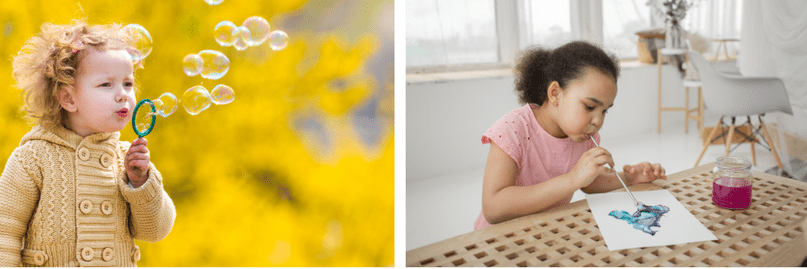
- Bubble Snakes: Make a bubble snake by cutting the bottom off a plastic bottle, covering it with a sock, dipping it in soapy water, and blowing through the bottle. The long “snake” of bubbles lets kids blow steadily and giggle at the silly effect.
- Windmills and Whistles: Toys like party blowers, whistles, pinwheels or toy recorders encourage kids to blow hard. Spinning a paper windmill or honking a party favour makes exhaling feel like play. These are great for even the youngest preschoolers.
- Bubble on Water: This is an easy-but-fun activity. Fill a shallow cup (or a bottle) with little water, put a straw in it, and let your child blow through the straw to make bubbles. This requires careful, steady blowing and helps them learn to control exhalation.
- Active Play: Don’t forget gross motor fun! Physical play naturally expands the lungs. Jumping on a small trampoline or space hopper, dancing to music, or riding a toddler tricycle gets their heart pumping and lungs working. Even crawling under a low table, tossing a ball back and forth, or playing simple “up and down” games (like bouncing on knees or a ball) helps develop chest mobility.

Tip: Keep play sessions short and frequent. Even 10–15 minutes of these breathing games once or twice a day can make a difference. And always keep your child hydrated – drinking plenty of water helps thin mucus, making it easier to clear.
Primary School Kids
Primary school children can handle more complex games and mini-sports. They also enjoy a bit of competition or teamwork:
- Cotton Ball Soccer (AKA Blow Football): Draw a “soccer field” or create soccer goal posts on a table or floor with tape. Use small cotton balls or make a rolled-up paper “ball.” Give each child a straw and have them blow the ball into the goal. You can even organise mini “blowing races” or a tournament. This playful game makes kids take several big breaths in and blow out in bursts.
- Paper Boat Races: In a bathtub or large basin, float small toy boats or paper boats. Let the child blow the boat from one end of the tub to the other using a straw. Watching the boat move keeps them entertained while they practice sustained blowing.
- Balloon Games: Simple balloon play is great exercise. Blow up balloons together – this requires strong inhales and prolonged exhales. Try games like keeping a balloon in the air as long as possible, or gentle balloon volleyball. Each puff and hold of the balloon uses lung muscles.
- Musical Challenges: Older kids might enjoy wind instruments or singing. Have them try to hold a note as long as possible, or blow up a paper bag all at once with one breath. Playing a recorder, harmonica, or even blowing into a kazoo can subtly train their lungs without feeling like “exercise”.
- Jumping and Running Games: Classic playground fun counts as lung exercise. Games like hopscotch, jump rope, pogo stick, or using a skipping rope/trampoline keep hearts racing and lungs expanding. Tag, hide-and-seek, or obstacle courses make moving around natural and silly, giving a good aerobic workout.
- Dance and Active Chores: Music and movement are a perfect combo. Find videos on YouTube and let your kids follow the dance moves. Search for “Just Dance” videos on YouTube or KIDZ BOP. This is entertaining for the whole family and provides hours of active fun.
Pro tip: Let the child choose activities they love. Kids stick with exercise longer when it feels like play. Whether it’s building pillow forts (and crawling through them!) or shooting hoops in the backyard, the key is more deep, active breaths in the day. Try to mix in some blowing games each day – for example, start or end a play session with 5 minutes of bubble-blowing or balloon games.
Tweens & Teens
Older children with CF are often more self-motivated, but it helps to get creative too:
- General Sports: Many teens thrive on team sports. Joining soccer, baseball, swimming, track, or cycling clubs gives structured exercise that improves endurance. Even hiking, dancing classes, or yoga help keep lungs healthy. Remind them: exercise really pays off in CF – it helps clear lungs faster after a cold and keeps them feeling stronger.
- Strength and Breathing Training: Activities like yoga, pilates, or even weight training (supervised) can improve posture and breathing muscle strength.. Encourage practices that focus on deep breathing and core strength. Choir or band (playing a wind instrument) is also a fun way to work on breath control.
- Karaoke Fun
For high schoolers with cystic fibrosis, karaoke isn’t just a way to belt out favourite tunes – it’s a secret weapon for stronger lungs. Singing encourages deep, controlled breaths, strengthens respiratory muscles, and helps clear airways, all while feeling more like a party than therapy. Whether it’s a power ballad in the living room or a duet with friends online, karaoke turns everyday breathing exercises into something joyful, social, and wonderfully loud.
Keeping lung care fun doesn’t mean skipping doctors’ advice – these games complement prescribed airway clearance. By turning daily breathing exercises into play or sports, parents help kids with CF stay fit and happy. After all, the holiday is about fun: every bubble blown or cotton ball chased is a step towards stronger lungs!
Sources:
Pediatric CF centres and lung-exercise guidelines provide these ideas. Thanks to Cambridge University Hospitals, Sheffield Children’s NHS and SickKids (AboutKidsHealth) for your research and ideas.